Seeing the Mediterranean from the sea
The Mediterranean has always been one of the most visually and culturally dense regions in the world. It is a space where civilizations overlap, where coastlines are lined with ancient cities, and where the sea itself acts as a connective corridor rather than a barrier.
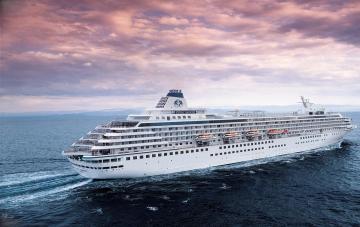
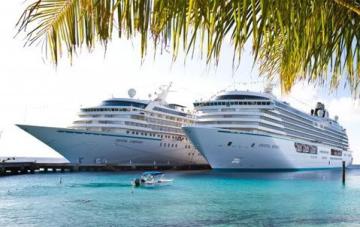
Most travelers experience it from land — walking through ports, climbing old city streets, or viewing coastlines from beaches. But there is another perspective that changes the entire perception of the region: seeing it from the deck of a large cruise liner.
From the sea, familiar places lose their usual framing. Cities appear as layered silhouettes rather than mapped streets. Mountains, harbors, and historical structures merge into one continuous coastal narrative.
The psychology of distance and perspective
Being on a liner deck introduces a physical and psychological distance from land. This distance reshapes how the human brain interprets scale, architecture, and geography.
Famous destinations that feel crowded and structured on land suddenly appear calm and almost abstract. The coastline becomes a composition of light, geometry, and elevation rather than a navigable urban space.
This shift in perception is not just aesthetic — it changes emotional response. The viewer becomes an observer rather than a participant, which alters the relationship with place.
Key perceptual shifts
- Cities appear as unified silhouettes instead of street networks
- Architectural density becomes visual texture
- Landmarks stand out as isolated focal points
- Time feels slower due to continuous horizon exposure
Famous Mediterranean cities from the sea
Barcelona and its layered coastline
Approaching Barcelona from the Mediterranean reveals a gradual transition from industrial port structures to the organic geometry of the city. The skyline is not dominated by a single cluster but instead unfolds in layers, with hills, towers, and architectural landmarks emerging at different depths.
From the deck, iconic structures like the Sagrada Família are not isolated tourist points but part of a broader spatial rhythm that includes residential zones, coastal infrastructure, and distant mountain outlines.
Rome’s coastal gateway: Civitavecchia
While Rome itself is inland, its maritime gateway provides a unique introduction. From a liner deck, the port appears as a threshold rather than a destination.
This transitional space emphasizes how ancient civilizations relied on sea access, making the arrival experience feel historically continuous rather than modern and segmented.
Venice and its fragmented emergence
Venice presents one of the most dramatic sea approaches. Unlike most cities, it is not approached gradually but appears almost suddenly from the water.
The skyline emerges as a fragmented constellation of domes, bell towers, and low structures rising from the lagoon. From a liner deck, Venice feels less like a city and more like an architectural mirage anchored to shallow water.
Natural landscapes and coastal transitions
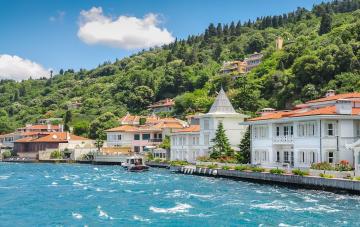
The Mediterranean is not only defined by cities but also by its dramatic natural transitions. Mountain ranges often meet the sea abruptly, creating visual contrasts that are especially striking from offshore perspectives.
From a cruise liner, these transitions are visible in full continuity — something that is difficult to perceive from land-based viewpoints.
Cliffs, bays, and island chains
Популярные статьи
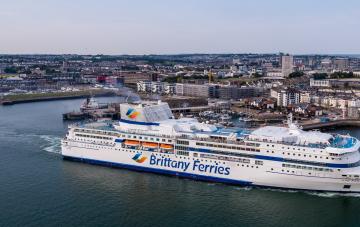
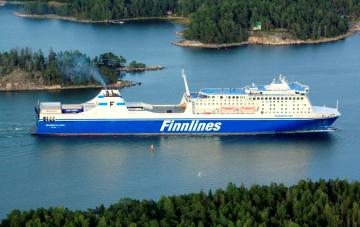
- Cliff formations appear as vertical boundaries between land and sea
- Bays create natural framing devices for inland cities
- Island chains form visual stepping stones across the horizon
These features create a rhythm of interruption and continuity that defines the Mediterranean visual identity.
Light, time, and sea atmosphere
One of the most significant aspects of viewing the Mediterranean from a liner deck is the interaction with light. The region is known for its intense solar conditions, but at sea, this light behaves differently.
Reflections on water amplify brightness during the day, while evenings transform the horizon into a gradient of deep blues, purples, and gold tones. The absence of fixed urban lighting in the foreground allows natural light to dominate perception.
This creates a temporal softness — a feeling that time is less segmented and more continuous.
The cultural layer of coastal observation
Many Mediterranean cities were historically designed to be seen from the sea. Fortresses, harbors, and coastal facades were often constructed with maritime visibility in mind.
From a liner deck, this intention becomes visible again. Coastal architecture reveals its original purpose: signaling, welcoming, and projecting identity outward toward arriving ships.
This perspective restores a historical layer that is often lost in modern land-based tourism.
Examples of maritime-facing design
- Harbor fortifications visible from open water
- Church domes positioned as navigational landmarks
- Promenades designed for sea-facing visibility
Movement as a framing device
A cruise liner is not stationary. This movement adds a cinematic quality to Mediterranean viewing. Cities and landscapes enter and exit the frame gradually, like scenes in a long continuous film.
This dynamic framing changes how memory is formed. Instead of static snapshots, travelers retain sequences — transitions between places rather than isolated impressions.
Movement also introduces unpredictability: weather changes, shifting light conditions, and evolving distances continuously reshape what is visible.
Emotional impact of offshore viewing
There is a subtle emotional shift that occurs when observing land from the sea. Familiar destinations feel both more distant and more complete at the same time.
The viewer is no longer inside the environment but surrounded by it. This inversion creates a sense of scale that is difficult to replicate on land.
For many travelers, this becomes the most memorable aspect of Mediterranean cruising — not the stops themselves, but the continuous act of observing them from afar.
Conclusion: a different way of knowing place
Seeing the Mediterranean from a liner deck is not just a travel experience; it is a reinterpretation of geography. Cities become compositions, landscapes become sequences, and the sea becomes a lens rather than a boundary.
This perspective does not replace traditional travel but complements it, offering a macro-scale understanding of a region defined by centuries of maritime connection.
Ultimately, the Mediterranean viewed from the water is not less real than the Mediterranean viewed from land — it is simply another layer of reality, one that reveals how deeply the sea shapes perception, history, and identity.